What is Mangal Dosha (Manglik)?
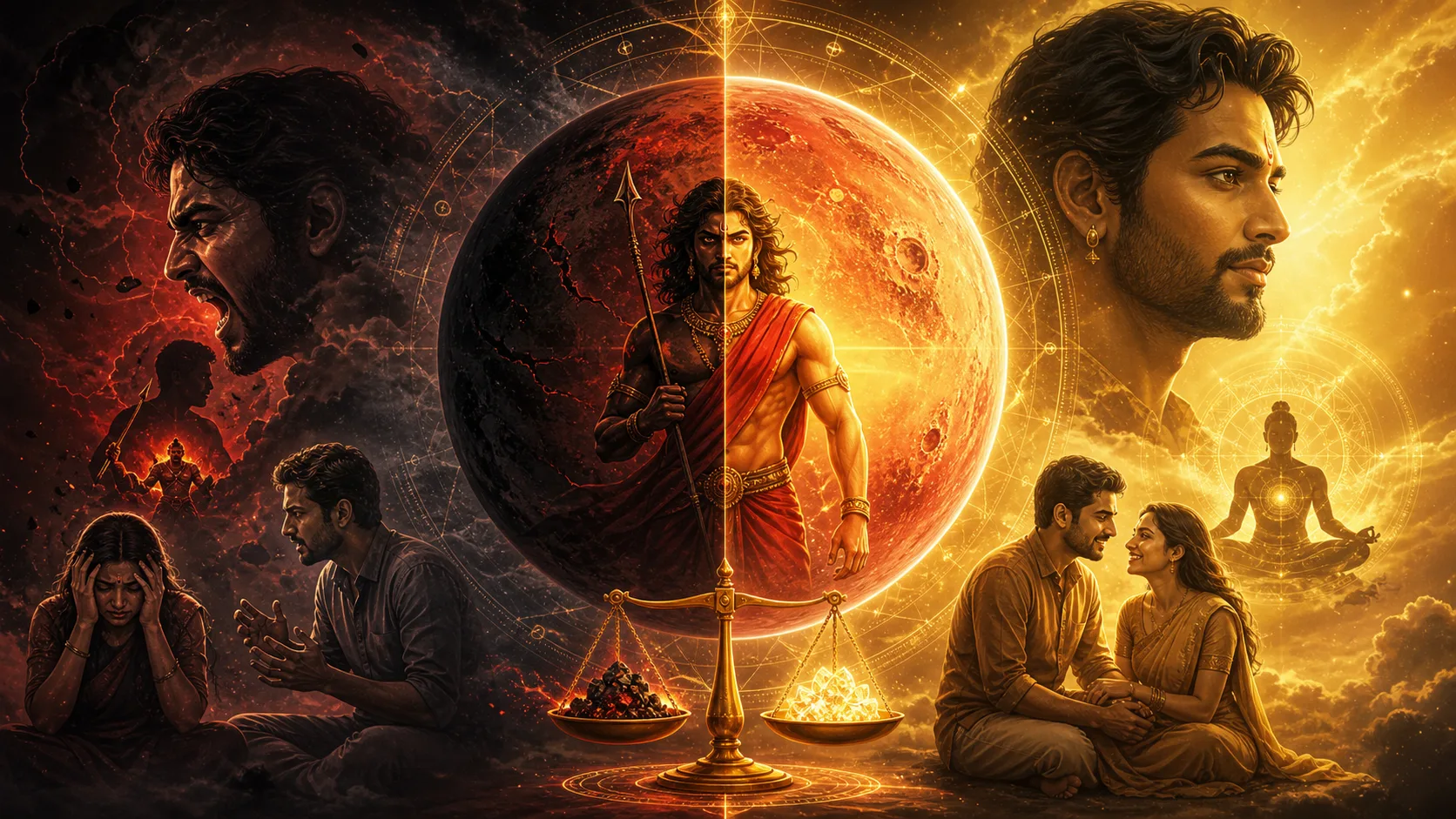
Mangal Dosha — popularly called being Manglik, and known as Kuja Dosha or Sevvai Dosha in the South — is one of the most-checked factors before a Hindu marriage. It occurs when Mars (Mangal), a fiery and aggressive planet, sits in one of the marriage-sensitive houses of the birth chart: the 1st, 2nd, 4th, 7th, 8th or 12th. Because Mars carries energy, conflict and passion, its presence in these houses is believed to create friction, delay or hardship in married life.
Checked from three points: Lagna, Moon and Venus
A proper Manglik check does not look at the Lagna (ascendant) alone. Mars is examined from three reference points — the Lagna (your physical self), the Moon (your mind and emotions) and Venus (the natural significator of the spouse). If Mars falls in a dosha house from any of the three, the dosha is present. You are only truly non-Manglik when none of the three is affected.
How strong is the dosha?
Severity is graded by how many of the three charts are afflicted and by which house Mars occupies. Affliction from all three points with no relief is High or Purna (full) Manglik; from a single point, or softened by a benefic, it is Low or Anshik (partial) Manglik. The 7th house (the house of marriage) and the 8th house (longevity of the spouse) are considered the most difficult placements.
Cancellations (bhang) and remedies
Crucially, Mangal Dosha is often cancelled or softened. The most widely accepted rule is that when both partners are Manglik, the doshas neutralise each other. Other cancellations include Mars in its own sign (Aries or Scorpio) or exalted (Capricorn), Jupiter or the Moon conjoining or aspecting Mars, and certain sign-and-house combinations. Traditional remedies include worship of Lord Hanuman, the Mangal mantra, Tuesday fasts, and — for a strong dosha — Kumbh Vivah before marriage. Traditions differ, so treat this as an indicative reading and consult Guruji on the Aradhana app for a full assessment.